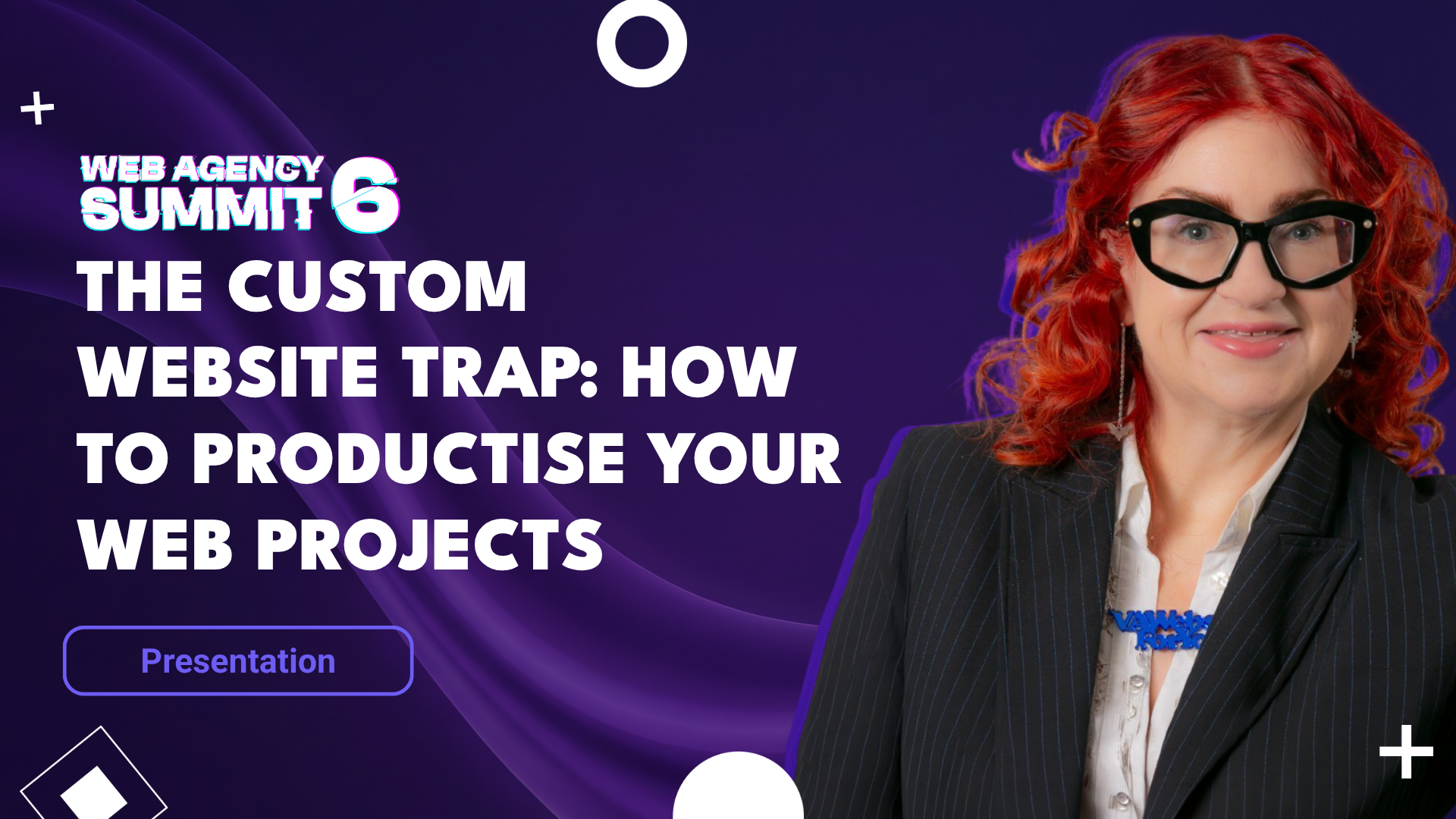
Alison Rothwell, founder of VA Website for You, presents a first-hand account of escaping what she calls "the custom website trap" — the exhausting cycle of bespoke web builds that plagues many web agencies. After running a design and development agency with a team of six to eight people and managing over a hundred websites, Alison reached a breaking point driven by unpredictable timelines, thin margins, scope creep, and the relentless pressure of constantly finding new projects to replace completed ones.
Her solution was to stop doing bespoke websites entirely for a defined segment of the market, pick a specific niche she already understood well (virtual assistants), and build a productised, subscription-based website-as-a-service offering around that niche. The product — VA Website for You — uses guided onboarding, structured content collection via forms, template-based builds hosted on a multi-site platform, and a review process
supported by Atarim to deliver professional websites quickly, predictably, and profitably.
Clients subscribe on a fixed one-year contract and pay ongoing for hosting and support.
The talk covers the practical mechanics of her delivery engine, the mindset shift required to abandon bespoke work, how she sold her original agency to free herself up to launch the new product, and the principles she recommends others steal from her approach. Her central argument: the future of web design is not building more websites — it is building better systems for delivering them.
Key takeaways
- 01The bespoke web build cycle is structurally broken. Sales, marketing, and delivery are interdependent, and any slip in delivery cascades backwards into lost revenue and wasted time.
- 02Productising means building a product, not a project. A repeatable offer with defined scope, structured onboarding, and clear boundaries replaces the chaos of custom quotes and endless revisions.
- 03Niche selection is everything. Choose a niche you already know or are genuinely interested in. Picking an unfamiliar niche just because it looks profitable will fail. Alison chose virtual assistants because she had existing knowledge and a close relationship with a leading VA trainer.
- 04Service-based businesses suit productised websites far better than e-commerce. The relative consistency of content needs within a service-based niche is what makes templating viable and scalable.
- 05Structured onboarding replaces discovery workshops. Guided content collection via forms or a learning platform removes the main source of project delay — waiting on the client — and gives clients a clear, manageable process to follow.
- 06Subscription revenue changes the entire financial model. Recurring income from ongoing website hosting and support replaces the feast-or-famine of one-and-done project fees.
- 07A supporting content library dramatically reduces friction. Pre-written copy examples, template about pages tailored to sub-niches, and a curated image library mean clients are never stuck staring at a blank page.
- 08Limiting choices makes the client experience better, not worse. Bespoke builds often stall because clients cannot make design decisions. A tighter, pre-defined range of options removes that paralysis.
- 09You may need to sell or close your existing agency before you can build something new. Alison could not develop VA Website for You while running her agency. She sold the agency, fell back on her digital marketing skills for income, and devoted the freed time to building the product properly.
- 10Most agencies scale chaos, not systems. Hiring more people into broken processes is not scale. Real scale comes from building a delivery system that is predictable, consistent, and does not require the founder to manage every moving part.
The Problem: Stuck in the Never-Ending Web Build
Alison describes what she calls the consistent pattern of the custom website build: Write the proposal Do the discovery call Wait for content (which is almost always delayed) Enter endless revision cycles Watch the deadline slip Absorb the stress She was working primarily with small businesses that had limited budgets. When timelines slipped — usually because of the client's failure to deliver content on time — the administrative overhead at her end ballooned, and any profit margin that had existed on paper evaporated in practice.
The structural problem she identifies is not just the individual project. It is the dependency between delivery and growth. When you are doing custom web builds, you must be selling your next project while delivering your current one. If delivery slips, your attention is pulled away from sales and marketing, which creates a gap in the pipeline downstream. The whole model is fragile: a delay on one job creates pressure across the entire business.
She also describes the difficulty of managing a growing team within that model. More staff means more complexity, more tracking of who is doing what and why, and no reduction in the founder's cognitive load. The business demanded that she monitor every project, every client relationship, and every team member simultaneously.
The cumulative effect was that it started to impact every part of her life. Custom builds were consuming all available headspace, leaving no room for anything else.
The Pivot: Questioning Whether Bespoke Was Even Necessary
Alison's pivotal question was simple: what if I just stopped doing bespoke websites?
She began to think critically about who actually needs a full bespoke build. Her conclusion: not all clients do. Many clients do not need a full discovery workshop. They do not need 17 design options. They do not need months of meetings. They need: Credibility — a website that looks professional and instills trust Clarity — a site that communicates what they do quickly and plainly Speed — to get online without a lengthy build process Results — a site that functions as a marketing tool and brings in business For this category of client, a productised, templated offering is not a compromise. It is the right solution. The challenge is identifying which clients fit that description and building a product tailored precisely to them.
Niche Selection: Virtual Assistants
Alison chose virtual assistants (VAs) as her target niche. She explains her reasoning in detail.
Her connection to the niche came through a client relationship. One of her agency clients was a virtual assistant who went on to become a leading UK VA trainer. Through years of working together — building the client's original website and then her training platform — Alison developed a deep understanding of what VAs needed from a website. That client was very clear: VAs need something simple, but it has to meet specific criteria that help them win clients.
Beyond familiarity, Alison identified several structural reasons why virtual assistants were a strong niche for a productised website offering:
Growing market. The VA industry was expanding, meaning there would be a consistent flow of new potential clients entering the market.
Service-based business model. VAs do not sell physical products, which means e-commerce functionality is not needed. This matters because productised websites work best for service businesses where the content structure is predictable. Alison explicitly notes that a non-bespoke website would not work well for the e-commerce sector.
Need to build trust quickly. VAs are often sole traders or small operators competing for clients who need to trust them with access to their business. A professional website is a significant trust signal.
Overreliance on social media. Many VAs were relying entirely on social platforms to market themselves. Yet their clients — typically businesses with their own websites — expect professional web presences from suppliers. There was a clear gap between what VAs had and what their clients would expect.
Affordable credibility gap. VAs needed websites that looked as good as the websites of the businesses they worked for, but at a price point that matched their income level.
Predictable content structure. A VA website needs a services page, a pricing page, an about page, trust signals (testimonials and reviews), and contact information. That structure barely varies across the niche, which makes templating genuinely viable.
Alison's broader principle: do not enter a niche you know nothing about, and do not enter one you have no interest in learning about. If the niche does not engage you, the product will not succeed because you will not stay curious enough to keep improving it.
The Product: VA Website for You
VA Website for You is a website-as-a-service product built on a multi-site WordPress platform. It is not a custom build. Clients choose from a defined set of design options, receive a guided onboarding experience, and end up with a professional, functional website built from a repeatable template — one that nevertheless looks distinct and personal because the content within it is their own.
The product offers two tiers:
- A full website (multiple pages)
- A single web page (for clients who need a simpler or faster solution) Both are delivered through the same onboarding and content collection system.
The key design decisions behind the product: It looks good. Alison was deliberate about ensuring the output did not carry the visual stigma of a template or "budget website." The goal was to produce something that looked credibly professional, not something that signalled a cost-cutting compromise.
It is structured around outcomes. The product is marketed not as "a website" but as a business tool that helps VAs win more clients, build credibility, and market themselves while they sleep. Alison makes the point that not everyone instinctively understands why a website matters — some clients still see it as a "nice to have" rather than a genuine business asset.
The pitch that their Facebook page or social media presence can be removed at any time, whereas a website is their own owned space on the internet, is consistently effective.
It creates recurring revenue. The website lives on Alison's multi-site platform. Clients pay a subscription fee and sign a fixed one-year contract. After the year, they are free to take their content elsewhere, but the infrastructure stays on Alison's platform. This converts what would have been a one-off project fee into ongoing subscription income — and it is not framed as a care plan, but as a product subscription.
VA Website for You is a website-as-a-service product built on a multi-site WordPress platform.
The Delivery Engine: How It Actually Works
This is the operational core of the talk. Alison describes a step-by-step delivery process that removes the main sources of delay and chaos from the traditional custom build.
Step 1: Sign-Up and Guided Onboarding
When a client signs up, they are taken through a structured onboarding process. Alison built this using LearnDash, though she acknowledges that alternatives — from Google Drive setups to other membership platforms — can work equally well.
The onboarding process walks the client through every page or section of their website. For each section, there is a dedicated guide explaining what content is needed and why. The client completes a Google Form for each section, answering specific prompts that give Alison exactly the information she needs to populate the template.
For example: for a pricing page, the form asks the client to fill in the specifics for each service — name, description, price. The client fills in the blocks; Alison drops the completed content into the template.
Step 2: Kick-Off Call
Alison initially assumed that clients could navigate the onboarding independently without any assistance. Beta testing revealed that this was not always the case. People are individuals: some work through the process quickly and confidently, while others need more support.
Her solution was to build in a call at the start of each project. This call introduces the client to how the process works, answers any questions, and provides a moment of personal connection. Alison notes that this call is brief and low-effort compared to the multiple lengthy calls required by a bespoke build process — but it significantly reduces downstream friction.
Step 3: Content Upload and Review
Once the client has completed the onboarding forms and submitted their content, Alison uploads all of it into the chosen template. The review process — where the client reviews the assembled website and requests any small changes — is handled using Atarim's point-and-click feedback tool. Alison explicitly names Atarim as the platform she uses for this step, citing how easy it is for clients to give direct feedback on specific elements of the page without needing technical knowledge.
Step 4: Launch
Once revisions are complete, the site goes live.
Step 5: Ongoing Support and Subscription
Post-launch, the client remains on Alison's platform under their subscription. Alison maintains an ongoing relationship with her client base and actively uses their feedback to improve the product. When clients request features or identify things they need, those improvements are built into future versions of the product — available to all clients, not just the one who requested them.
The Supporting Content Library
One of the practical innovations Alison describes is the resource library she has built for her clients. This grew out of recognising a common sticking point: clients getting stuck when trying to write their own content.
The library currently includes: A curated image library. Approximately one hundred images specifically selected for the VA niche. Clients can browse the library and choose images rather than hunting for their own, which removes one of the most common content bottlenecks.
Pre-written copy examples. Alison has written multiple versions of key pages — most notably the about page — tailored to different sub-niches within the VA world. Examples she gives include: VAs who specialise in tech, VAs who work with high-net-worth individuals, and VAs who focus on social media content creation. The client can find the version that most closely matches their situation, use it as inspiration or a starting point, modify it to reflect their voice and specifics, and then submit it via the form.
This library approach dramatically reduces the friction of content creation for clients who are not natural writers, which in turn keeps the delivery timeline moving.
Comparing the Old Model to the New
Alison draws an explicit contrast between how she operated before and how the new model works.
Old Model (Bespoke Agency) Custom quotes for every project Random and unpredictable client types One-off fees with no ongoing revenue Any delay creates chaos in planning and team management Profitability dependent on tight delivery that rarely happened Constant cycle of sales, delivery, and chasing the next project Scaling meant hiring more people into a broken system New Model (Productised Website as a Service) Clear, simple packages with defined scope Well-defined niche with predictable client needs Recurring subscription revenue (not a care plan) Structured content collection means delays are anticipated and manageable Predictable process: Alison now knows approximately how long it takes clients to deliver content Proactive client support when someone gets stuck, rather than reactive chaos management Scalable without proportionally increasing team size or founder involvement
What You Can Steal: Alison's Framework for Others
Alison offers a set of practical principles for any web professional who wants to try a similar productised approach.
Pick one niche and nail it before expanding. Do not try to build productised offerings for multiple industries simultaneously. Master one niche, build the systems, validate the product, and then consider whether to add more.
Choose a niche you already understand or are genuinely curious about. The knowledge and interest you already have will inform every decision you make about the product. If the niche bores you, the product will stagnate.
Start with one repeatable, packaged offer. Do not build an elaborate catalogue from day one. Create one clear package to test the concept, validate the delivery process, and gather feedback.
Limit choices deliberately. Counterintuitively, giving clients fewer design and content choices improves their experience. Bespoke builds often stall because clients cannot make decisions when faced with unlimited options. A bounded set of choices — select your colour scheme from these options, choose your template from these layouts — moves things forward. Alison recalls the dreaded client phrase "I'll know it when I see it" as the moment any bespoke build becomes unpredictable.
Invest in your onboarding process. Getting onboarding right takes iteration. Be prepared to revise it based on early client experiences. The addition of a kick-off call was a direct response to beta tester feedback. Good onboarding is the single most important factor in keeping the delivery timeline on track.
Sell on outcomes, not on features. Clients are not buying a website. They are buying credibility, more clients, business growth, and the security of owning their online presence.
Make sure your marketing communicates that.
Do not assume clients understand the value of a website. Some clients genuinely do not see why a website is necessary when they have a social media presence. The argument that a Facebook page or Instagram account can be shut down by a platform at any moment — but a website is theirs to own — is a consistently effective way to reframe the conversation.
Choose a niche you already understand or are genuinely curious about.
Mindset: The Fear of Making the Transition
The host asks Alison directly about the psychological difficulty of shifting from bespoke to productised. Her answer is candid.
The transition was "hugely scary." The appeal of a custom build is that it always looks great when the quote gets approved — a solid fee, clear scope (or seemingly clear scope), and the promise of good profit. It is only once delivery starts that the unpredictability sets in, and it is that unpredictability that began to consume Alison's headspace.
She describes the cognitive load of running a team on bespoke projects: constantly tracking which project was at what stage, which client was behind, which team member was
overloaded, what needed to be reshuffled. Scaling the business required adding more people, which added more complexity without resolving the underlying structural problem.
The other dimension of the fear was financial. When you are in a bespoke project, you need to be simultaneously thinking about where the next project is coming from. Trying to focus on delivery while planning for future revenue creates a split-attention problem that never resolves itself under the custom build model.
The Decision to Sell the Agency
The most significant practical step Alison took was selling her agency.
She had been working on VA Website for You for a long time before it went live. The reason for the delay was straightforward: she had no time to develop it while running the agency.
The agency consumed all available bandwidth.
She reached a point where something had to give. The decision was: jump now, or not at all.
She sold the agency.
To bridge her income during the development period, she fell back on her background as a digital marketer. Digital marketing projects, she explains, are easier to deliver because they are dependent only on her own skills — there is no team to coordinate, no client content bottleneck in the same way, and no complex delivery engine to manage. This gave her financial runway to build VA Website for You properly.
Her reflection on this, when asked what she would have done differently: she would have moved faster. But she acknowledges she was not in a position to do so at the time. The lesson for others: once the decision is made, make it decisively. Do not procrastinate. Get as organised as possible, then jump.
The host echoes this with the observation that the hardest clients to leave behind are often the ones who are most vocal about not wanting you to go — sometimes the most difficult clients are the ones who react most dramatically to a handover.
The Broader Argument: Systems Over Volume
Alison closes the talk with what amounts to her thesis statement: "Most agencies can scale chaos. They're hiring into broken systems. They've got too many custom exceptions, or too many services that they work with, they don't have clear onboarding, selling gets very complex. But I really think that the future of web design isn't building more websites — it's building better systems for delivering them."
This encapsulates the entire arc of her talk. The instinctive response to a growing agency is to hire more people and take on more work. But if the underlying delivery system is broken — if every project is a custom exception, if onboarding is unclear, if scope creep is the norm
— then adding headcount just scales the dysfunction. The alternative is to design the delivery system first, build the product around it, and then scale the system.
Q&A Highlights
The talk includes a brief Q&A period hosted by the session host.
On the mindset shift from bespoke to productised: Alison describes the unpredictability of custom builds as the primary driver. It was not just that bespoke was hard — it was that it was impossible to plan around, impossible to scale without adding people, and impossible to step back from because she was always needed in the middle of it.
On what she would have done differently: She would have moved to launch the productised product faster. The barrier was time, and the solution was selling the agency. In retrospect, making that decision sooner would have been better.
On procrastination in the web agency world: The host and Alison both observe that web agencies are notoriously bad at applying their own expertise to their own businesses — the "cobbler's shoes" problem. Agencies fail to update their own websites, leave outdated services on their service pages, and procrastinate on strategic decisions. Making the decision and committing to it is more important than waiting for perfect conditions.
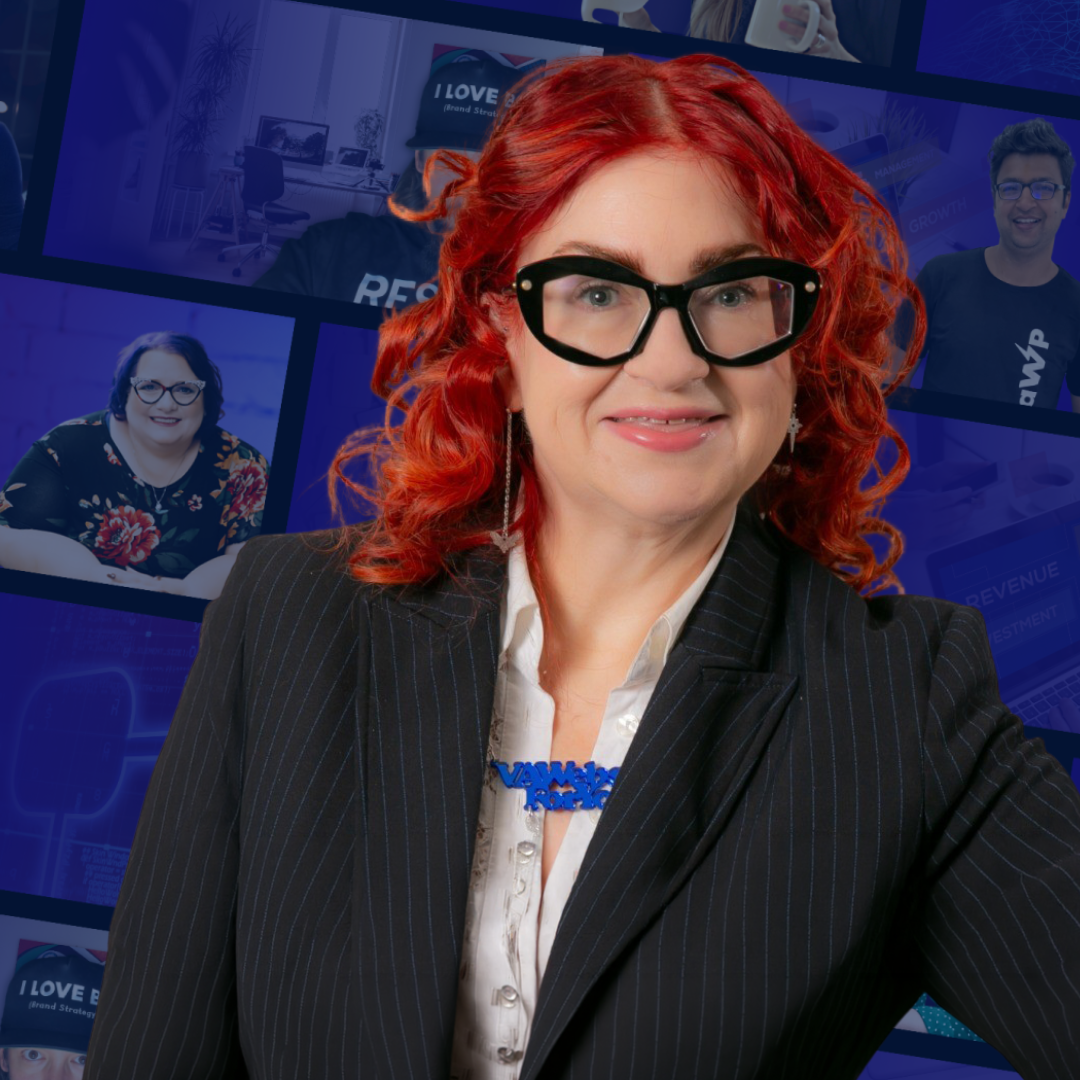 About the speaker
Alison Rothwell
VA Website for You
About the speaker
Alison Rothwell
VA Website for You
Alison Rothwell runs VA Website for You, a web agency that moved away from fully custom builds toward a productised, repeatable offer. Her focus is on making agency delivery faster and more predictable without sacrificing quality.