
Shawn Davis of Duda (a cloud-based website building platform serving 23,000 agencies and SaaS companies) presented original research on how AI search is reshaping online discoverability for small and medium-sized businesses (SMBs). Drawing on a dataset of over 858,000 SMB websites hosted on Duda, he outlined the rapid growth in AI crawler traffic, the shift from traditional search rankings to AI-generated recommendations, and the measurable business impact this shift is having on SMBs. His central argument is that AI search optimisation is no longer an enterprise-only concern — it is now urgent and actionable for local businesses and the agencies that serve them. The session was cut short due to a technical connection issue before Davis could complete his presentation, so only the opening research findings and framing were delivered. The host stepped in to bridge the gap and encouraged attendees to access Duda's published research PDF directly.
Key takeaways
- 0168% of local searches now surface AI overviews, according to third-party research from White Spark, meaning the majority of local queries are already being shaped by AI-generated content.
- 02Discovery is fundamentally shifting from a rankings model (a list of links) to a recommendations model (AI selects and presents a shortlist with reasons), which changes how SMBs need to think about their online presence.
- 03Sites that received more AI crawler visits showed dramatically better business outcomes: 3.2x more human traffic, 2.7x more form submissions, and 2.5x more click-to-call events compared to the median site.
- 04Most SMBs have completed fewer than two AI search optimisations, meaning the opportunity for agencies to add value is enormous and largely untapped.
- 05Local businesses are disproportionately exposed to this shift because they rely heavily on last-minute, intent-driven searches — exactly the query type where AI overviews are now most consistently appearing.
- 06The traditional SEO fundamentals (NAP consistency, Google Business Profile) are necessary but no longer sufficient for AI-era visibility; additional optimisation steps are required.
- 07Content quality and relevance is one of the largest scaling factors for AI visibility — framing content around outcomes for users, rather than self-promotion, is the right direction.
- 08Agencies have a clear and timely opportunity to position themselves as thought leaders by bringing AI search optimisation services to SMB clients who are currently unprepared and underserved.
- 09The tactics that work for AI search at the SMB level do not require PR agencies or enterprise-scale budgets — they are scalable and practical for local businesses.
The Problem with Existing AI Search Discourse
Davis opened with a pointed observation about the state of the AEO and AI search conversation. He described it as falling into two main problems: Vagueness. Much of the existing discussion around what wins in AI search is, in his words, "wishy-washy" — general principles without clear evidence or actionable specifics.
Enterprise bias. The conversation has been dominated by enterprise-level concerns and solutions. Recommendations such as hiring a PR agency, investing in large-scale content operations, or building out significant digital PR programmes are simply not relevant or accessible to a local plumber, a coffee shop, or a mechanic.
Duda's position is different because of the nature of its platform. Because Duda hosts nearly all of its client sites centrally in the cloud, the company has direct visibility into crawler behaviour across its entire network. This gives Duda a uniquely large and consistent dataset of SMB website activity — and it was from this dataset that the research Davis presented was drawn.
The Scale of AI Crawler Activity on SMB Sites
Davis presented specific crawler traffic data observed on Duda-hosted websites between March 2025 and February 2026: ChatGPT crawlers: up 67% (the largest AI platform by volume of crawl visits) Claude crawlers: up 2,300% Gemini crawlers: up 400% Overall AI crawler traffic across Duda-hosted sites: up 73% He emphasised that these are not enterprise websites — these are almost entirely SMB sites. The scale of AI interest in these sites is therefore significant and growing rapidly.
Ignoring AI search optimisation is no longer viable for this segment.
The Shift from Rankings to Recommendations
Davis described what he sees as the fundamental change underway in how businesses are discovered online. Previously, a consumer searching for a local service — say, a mechanic 1.
after their check engine light came on — would receive a list of links and would need to browse, read reviews, and make their own selection. That behaviour is changing.
AI-driven search is increasingly offering recommendations directly. Instead of a list of ten mechanics, a user might be presented with three mechanics in their area, along with AI-generated summaries of each and reasons to choose between them. Davis noted that more and more consumers are accepting these recommendations and acting on them without clicking through to individual websites.
The downstream effect is a decline in direct website traffic — something he noted would not surprise anyone who has been following this space. People are getting what they need from the AI recommendation layer and not digging deeper. For SMBs that depend on organic discovery and last-minute, high-intent searches, this is a significant threat.
Why Local Businesses Are Particularly Exposed
Davis gave specific attention to local businesses and the nature of local search. He used the example of someone searching for "mechanics near me that specialise in hybrid vehicles" — a slightly more specific query that he said consistently triggers AI overviews in his own testing. The implication is that as searches become even marginally more specific or conversational, AI overviews appear with increasing reliability.
Third-party research from White Spark corroborates this: 68% of local searches are now surfacing AI overviews. Davis acknowledged the difficulty of attributing traffic specifically to AI overviews versus standard organic results from within analytics tools, but said the pattern is visible enough in real-world search behaviour to be treated as a serious signal.
Local businesses — especially Main Street SMBs — are particularly vulnerable because: They rely on last-minute, high-intent searches for leads.
Their potential customers are exactly the users now being intercepted by AI recommendation layers.
They have typically done minimal SEO beyond basic fundamentals, and almost no AI-specific optimisation.
The Research Dataset
Davis outlined the dataset underpinning Duda's research: 858,457 websites in the sample 68.9 million crawler visits observed 325 million user sessions analysed Time period: February 2026, restricted to sites that were live prior to 2026
Additional filtering ensured the sites selected were receiving reasonable traffic and had been established for a meaningful period This was positioned as a large, clean, SMB-specific dataset — not a general web sample, and not enterprise-skewed.
Business Impact: What High AI Visibility Actually Delivers
The most commercially significant part of Davis's presentation was the correlation between AI crawler activity and real business outcomes. Sites that received higher volumes of AI crawler visits — which Duda treats as a reliable proxy for how often AI is recommending, considering, or learning from a site — performed substantially better across all key metrics: 3.2x more human traffic than the median site 2.7x more form submissions 2.5x more click-to-call events This reframes the AI search conversation for agencies. It is not merely an abstract question of visibility or brand awareness — it has a direct and measurable connection to leads and conversions for SMB clients. Davis described this finding as "a complete game changer for the conversation" because it provides the business case that was previously missing for the SMB context.
The Opportunity for Agencies
Having established the scale of the shift and its business impact, Davis turned to what this means for digital agencies serving SMBs. His framing was unambiguous: this is a wide-open opportunity.
Key observations: Most SMBs in Duda's research had completed fewer than two AI search optimisations. These sites are largely unprepared.
In local SEO, many SMB sites have historically stuck to fundamentals: NAP (Name, Address, Phone Number) consistency across the site, and maintaining a Google Business Profile. Beyond that, there is relatively little competitive pressure in many local markets, so SMBs have not been pushed to go further.
AI search changes that calculus. The bar for local AI visibility requires more than NAP and a GBP.
Agencies can come in as thought leaders, presenting a handful of actionable, scalable optimisations that most SMB clients have never considered.
Davis positioned this as an opportunity for agencies to present themselves as "superheroes" — keeping their clients discoverable, keeping leads flowing, and keeping those businesses competitive in their local communities.
The important qualifier Davis added is that this does not require the kind of enterprise-scale investment that AI search discussions often imply. There are practical, scalable things SMBs and their agencies can do without hiring PR firms or building large content operations.
Content as the Primary Scaling Factor
Just before his connection dropped, Davis was beginning to explain the specific optimisation factors Duda's research had identified. He had reached the point of identifying content as one of the biggest and most scalable factors in AI visibility for SMB sites. The host later echoed this in his bridging remarks, noting that content that focuses on outcomes for users — rather than self-promotional copy — tends to perform well.
Davis did not have the opportunity to elaborate on the full list of factors before the session was cut short.
Session Interruption and Host Bridging
At approximately the point where Davis was beginning to discuss specific content optimisation tactics, his internet connection dropped. The host (Ryan) stepped in to fill the gap, apologising to the audience and encouraging attendees to: Follow a link posted in the session chat by a Duda team member (Gill/Gilly Sahar) pointing to Duda's published research PDF, which covers the findings in full. The host noted it requires an email address to access.
Visit the sponsors arcade and networking lounges while waiting for Davis to potentially reconnect.
Davis did not reconnect during the session. Ryan closed the broadcast after confirming no indication of a return from Davis.
Ryan's bridging commentary reiterated the content point: that the fundamentals of being discoverable in AI search remain rooted in producing genuinely useful, relevant content — specifically content that communicates outcomes for users rather than talking about the business itself.
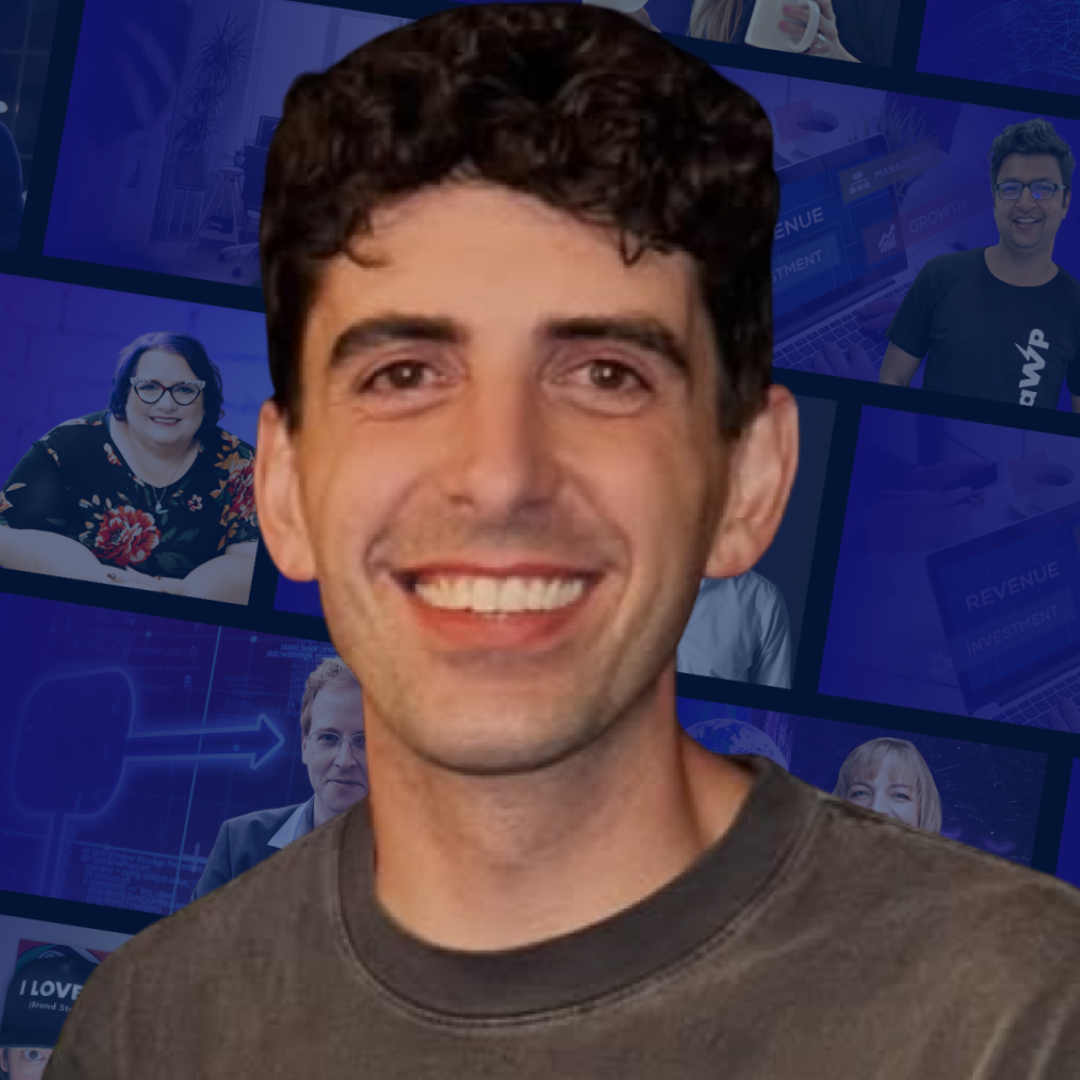 About the speaker
Shawn Davis
Head of Content and Communications, Duda
About the speaker
Shawn Davis
Head of Content and Communications, Duda
Shawn Davis is Head of Content and Communications at Duda, a website building platform used widely by agencies and SaaS companies. His research focuses on how AI is reshaping local search and small business discovery.