Sandra Kurze, drawing on her ten years of management experience and her role leading Crate (formerly an agency, now a product company behind CrateSuite), delivers a frank, experience-grounded talk about what agencies get wrong when they try to transition into product companies. Her core argument is that moving from agency to product company is not a natural evolution — it is a deliberate, strategic transformation that most agencies underestimate. She walks through the most common traps: mistaking client demand for market validation, lacking focus, misjudging the financial reality, pricing poorly, and trying to scale before a go-to-market strategy has been validated. The talk is organised around the phases a company goes through, the financial realities that blindside agency founders, the science of pricing, and the team structures required. Sandra closes with three hard-won conclusions and a single sentence she wants attendees to take away: do not build a product to escape agency work — build one because you have a sharply defined ideal customer profile, a validated go-to-market strategy, and a business model that can actually win.
Key takeaways
- 01The transition from agency to product company is a strategic transformation, not a natural evolution, and must be treated as such.
- 02Without a clearly defined Ideal Customer Profile (ICP), your messaging speaks to everyone and sells to no one.
- 03The four phases of product development — founding, product-market fit, go-to-market (GTM) refinement, and scale — must be worked through in order; skipping the GTM phase is the single most common and costly mistake.
- 04Recurring revenue is not passive income. Every new customer adds support, infrastructure, and operational complexity.
- 05Most agencies dramatically underestimate the true cost of running a product company: development is just the start; support, marketing, sales, onboarding, and tooling all add up.
- 06Pricing is a science, not a gut feeling. Penetration pricing (starting cheap) almost always leads to staying cheap, which is unsustainable.
- 07Small-ticket SaaS economics only work at very large volume, with a product-led growth model and minimal human interaction in the sales process.
- 08Founder-led sales must come before hiring a sales rep. No external hire can fix an unvalidated sales playbook.
- 09Do not hire for scale (sales reps, affiliate programmes, partnerships) until the GTM strategy has been validated through your own selling efforts.
Why Agencies Think Building a Product Makes Sense (And Why That Logic Is Flawed)
The Apparent Logic The idea of turning agency work into a product feels intuitive. An agency builds something excellent for a client. Other clients start requesting the same thing. The conclusion seems obvious: productise it, generate recurring revenue, escape client chaos, and build something scalable. Sandra acknowledges this reasoning is compelling, and that almost every agency has entertained it at least once.
Where the Logic Breaks Down The problem is that this reasoning conflates two separate things: client demand and market viability. Just because several clients asked for something does not mean there is a large enough addressable market to build a sustainable product business around it. The more likely outcome is a collection of custom solutions that are not genuinely scalable.
Sandra also challenges the assumption that technical elegance drives adoption. She points to augmented reality headsets as an illustrative example: a decade ago, widespread adoption by 2026 seemed certain. In reality, almost no one uses them. The Metaverse followed a similar trajectory. Products can be technically coherent and still fail to find customers. This is a warning against building products that make sense from an engineering perspective without validating whether real buyers exist.
The Most Common Traps
Trap 1: Repackaging Client Work as Product Innovation Client requests are a starting point for ideas, not a substitute for market research. Agencies fall into the trap of assuming that because clients wanted something, a broader market wants the same thing. The result is typically a set of custom solutions that are difficult to generalise, price, or support at scale.
Trap 2: Insufficient Focus Because Agency Revenue Keeps Winning As long as the product is not generating meaningful revenue, the agency work remains the economic lifeline. This creates a permanent tension: spend time on product development, or take on another client engagement that generates immediate cash. The agency work almost always wins in the short term, because client deadlines and demands are urgent and the consequences of ignoring them are immediate. Product development, by contrast, can always be postponed. The result is that product velocity is consistently sacrificed.
Trap 3: The Financial Structure Is Wrong Agency finances and product company finances are fundamentally different. Using agency revenue to fund product development sounds pragmatic, but it creates a structural conflict.
Sandra goes into this in detail in a later section, but flags it here as one of the primary root causes linking all the other traps together.
The Common Root Cause All of these traps share one origin: the agency is trying to act like a product company while still thinking like an agency. The mental models, incentive structures, financial habits, and operational rhythms of an agency are not simply transferable. The shift is not an evolution — it is a transformation, and it requires being treated as one.
The Problem of Trying to Sell to Everyone
Using CrateSuite as a live case study, Sandra describes what happens when a product tries to address every possible use case. At launch, CrateSuite had hundreds of potential use cases, and the team genuinely tried to sell to all of them. The consequences were predictable and painful: The website became incomprehensible because it had to speak simultaneously to individual freelancers and to multi-million-dollar global enterprises on the same pages.
Pricing was caught in an impossible position: too expensive for smaller customers, yet too cheap for larger enterprises to take seriously.
The feature list grew uncontrollably because every use case brought new requests that had to be accommodated.
The Solution: Ideal Customer Profiles (ICPs) The antidote is a crystal-clear product vision paired with a rigorously defined set of Ideal Customer Profiles. An ICP is not a speculative persona ("this might be interesting to someone, sometime") — it is a definition of the customer who has an acute, present pain that they actively need to solve, are willing to pay to solve, and whom the company can reach in the near term.
Sandra emphasises that focus means saying no. Messaging that tries to speak to everyone speaks to no one. ICPs are the customers most likely to become happy, loyal, and profitable — simultaneously.
She offers a clarifying example from Crate's own experience: higher education institutions in the United States are actually a strong fit for CrateSuite, because universities often manage hundreds of websites across disparate hosting environments. However, Crate does not treat higher education as an ICP — because university procurement cycles can take years. This means they will sell to universities when the opportunity arises, but they will not focus marketing spend or sales effort there. An ICP must be reachable on a timeframe that sustains the business.
Knowing your ICPs delivers focus across three critical dimensions: Pricing — you can price for the value your ICP actually receives.
Messaging — you can speak directly to their specific pains rather than writing generic copy.
Product roadmap — instead of adding features for every possible user, you can prioritise those that drive the most value for your defined customers.
Product roadmap — instead of adding features for every possible user, you can prioritise those that drive the most value for your defined customers.
The Phases of Transitioning from Agency to Product Company
Sandra outlines four sequential phases, and warns that the temptation to skip phases — especially the third — is where most companies destroy their potential.
Phase 1: Founding Phase
This is the idea stage. You identify a pain, you develop a solution, and you construct a narrative that makes sense. The founding phase is about establishing that a problem worth solving exists and that you have a plausible answer to it.
Phase 2: Product-Market Fit
This phase is characterised by intense customer engagement. The directive is simple: talk, talk, talk — and then listen. The goal is to validate your assumptions about both the pain you believe exists and the solution you have built. If the feedback requires iteration, iterate quickly. The product does not need to be perfect at this stage. The milestone is making the first genuinely happy customers, not shipping a finished product. A common mistake here is spending too long in development trying to produce something flawless before seeking market feedback, only to receive a disappointment when the product finally launches.
Phase 3: GTM and ICP Refinement (The Most Critical Phase)
Sandra describes this as the most critical phase and notes that it is the one most frequently skipped — particularly by funded companies under pressure to demonstrate rapid growth.
This phase is where the detailed work of identifying ICPs and defining a sales playbook and go-to-market strategy takes place.
The intellectual work required here is substantial. Each ICP will typically contain multiple buyer personas, and those personas can have entirely different views of the same product 1.
feature. Sandra illustrates this with a CrateSuite example around a feature called "global content," which allows dynamic assets to be synchronised across many websites: For a designer, this means no longer having to repair broken layouts after non-technical users attempt to edit content independently.
For a marketing team, this means being able to roll out campaigns or updated content across many websites without depending on developers.
For C-level executives, this translates into higher ROI, faster time to market, and reduced maintenance costs.
One feature, three completely different buying reasons. This means a product cannot be sold on feature lists alone — features must be translated into capabilities and value drivers, expressed in the customer's own language.
If the product-market fit phase was executed without deep, genuine listening to customers, this phase will produce only generic marketing copy. Sandra is direct about the consequence: companies rarely fail because they have a bad product. They fail because they have an undefined GTM strategy and no sales playbook.
Phase 4: Scale
Only after the GTM phase has been properly executed does it make sense to spend marketing budget or hire sales representatives. It is possible to scale earlier, but the likely outcome is that the company eventually realises it has been spending money without results and must return to the GTM phase — at enormous cost in time, focus, and money.
The Industry Leader Phase Sandra acknowledges that there is a fifth phase, the industry leader phase, but is deliberately deflating about it. This phase is the domain of companies generating revenues of $100 million or more. It is reached by a very small number of companies, and it does not need to be anyone's goal. She flags it not as an aspiration for the room but to ground expectations in reality.
The Financial Reality Nobody Warns You About
The Recurring Revenue Myth The allure of recurring revenue is one of the most cited reasons agencies want to build products. Sandra addresses this directly: recurring revenue is not a safe bet, and it is not passive income. The compounding effect of subscriptions takes years to materialise in a meaningful way, and the intervening period is financially treacherous.
Addiction to Large Numbers Agencies are accustomed to five-and six-figure deals. When a product launches and the first sale comes in at $29 per month, the psychological shock is real. The almost inevitable response is that when a large client project arrives offering tens of thousands of dollars immediately, the temptation to take it is overwhelming. A month becomes three months, the product has not moved, and the cycle repeats.
New Customer Problems That Don't Exist in Agency Work Running a product company introduces an entirely new class of operational problems that agency founders are unprepared for: expired credit cards, failed payments, cancelled subscriptions, customers claiming sudden illness to avoid paying, AI-generated emails from supposed software developers disputing that a contract ever existed. The operational surface of a product business is closer to running a SaaS company than running an agency, and this surprises almost everyone.
The Break-Even Point Most agencies dramatically underestimate the true cost of building and running a product business. The development cost is the obvious, visible expense. What follows is an entire ecosystem: customer support infrastructure, marketing, sales, onboarding processes, customer success programmes, tooling. Every element of this costs money. And the break-even point is almost never calculated correctly the first time. Iterations and pivots push it further out, sometimes repeatedly.
Recurring Revenue Is Not Passive Income This point is worth restating because it is so widely misunderstood. Every new customer brings more support demands, more questions, more infrastructure requirements, more update expectations. There is nothing passive about building a product business. It is an ongoing operation that scales in complexity alongside its customer base.
Accounting Matters Far More Than Agencies Expect Sandra flags accounting as a topic that makes people uncomfortable, but which becomes critical once a product company is operating. She uses lifetime licences as a specific example: sold as a marketing concept, they sound appealing (pay once, use forever). From an accounting perspective, they represent a lifetime obligation for support, maintenance, and updates that must be reflected on the balance sheet. Agencies rarely have the accounting sophistication to handle this correctly.
The Real Proof Is the Failures Sandra offers a pointed observation: the evidence that product businesses can work is not the ten famous success stories everyone knows. The real evidence is the thousands of
products that never made it — and most of them did not fail because of technology. They failed because of economics.
Pricing: Where Product Companies Quietly Destroy Themselves
The WordPress Ecosystem's Pricing Problem Sandra poses a direct question to the WordPress community: why is there such a strong cultural impulse to sell products as cheaply as possible? Crate's stated ambition is to be expensive — which requires delivering substantial value, but is the goal nonetheless. She observes that the WordPress ecosystem frequently applies pricing models that were designed for entirely different markets, and that these models have not evolved alongside changing customer expectations, particularly in the context of AI.
Penetration Pricing: The Theory and the Reality The most common pricing pattern in WordPress products is penetration pricing: start cheap or offer lifetime licences to build traction and a user base, then raise prices over time to reach a sustainable business model. In theory, this works. In practice, companies start cheap and stay cheap. Price increases, when they happen at all, are so incremental that the business model never fundamentally changes. The result is thousands of customers paying very small amounts of money while costs continue to grow.
The Connection Between Pricing and ICP Pricing cannot be designed in isolation from the ICP. If an ICP has not been defined, the product becomes priced for everyone by default — which sounds like a strength but is actually a sign that positioning is not yet clear. "Affordable for everyone" is not a strategy; it is a symptom.
Why Small-Ticket SaaS Is Harder Than It Looks Small-ticket SaaS pricing only works under specific conditions: a product-led growth model (free trials, freemium tiers, fully self-service onboarding) and very large user volumes. This model works well for simple products that users can understand and adopt immediately without assistance.
The moment a product carries meaningful complexity — which is usually a function of the value it delivers — it requires explanation, onboarding, and likely direct, personal sales engagement. As soon as human interaction enters the sales process, the unit economics of small-ticket SaaS break down. The margins on small ticket sizes cannot sustain the cost of human sales effort. This is why small-ticket SaaS businesses almost universally require external funding to sustain growth: organic margins are too thin.
Pricing Must Work in a Down Market Sandra adds a final criterion that is often overlooked: a pricing strategy must be viable even when the market is contracting and the customer base is not growing rapidly. Many pricing models that appeared to work were, in reality, only viable during periods of strong market growth. When growth slows, the model collapses. A sustainable pricing strategy must hold up under adverse conditions.
The Conclusion on Pricing
Pricing is a science, not a gut feeling. The goal, in most cases, is straightforward: charge as much as the market is willing to pay, which requires knowing your market well enough to understand what it will bear. If you price by instinct alone, the market will eventually correct you.
If you price by instinct alone, the market will eventually correct you.
Building the Right Team
Separate Product and Agency Work as Quickly as Possible Sandra's first and most urgent recommendation on team structure is to separate product development from agency project work as soon as it is feasible, even if the founder could theoretically manage both. The problem is not capability — it is context-switching and prioritisation. Developers who are asked to jump between fixing urgent client issues and meeting client deadlines on one hand, and advancing a product roadmap on the other, will always have their product work interrupted. Client demands are immediate and threatening; postponing a product feature is always possible. The product will consistently lose when these two responsibilities compete.
Founder-Led Sales Must Come Before Hiring The temptation to hire an experienced sales representative early is understandable but premature. If the founding team has not worked out how to sell the product themselves, no sales hire will fix that. The playbook must be developed through direct founder-led selling first. Only once the ICP, GTM strategy, and sales playbook have been validated through real selling experience does it make sense to hire someone to execute and scale that process.
This principle extends to external growth mechanisms: affiliate programmes, partnerships, and other multiplier strategies. These can all work — but only after the company has demonstrated it knows how to sell on its own.
Three Closing Conclusions
Sandra closes her talk with three lessons she describes as the kind that are usually only learned the expensive way.
Conclusion 1: Recurring Revenue Is Not a Strategy If the primary motivation for building a product is wanting monthly subscriptions or recurring revenue, Sandra's advice is direct: do not do it. Recurring revenue is not a strategy — it is a result. Building toward it as a goal, without a validated product and ICP, produces something that looks like a SaaS but does not deliver genuine value. A product is a business, not a side hustle, not a revenue hack, and definitively not passive.
Conclusion 2: The Most Important Milestones Are Not Feature Launches The most important milestones in a product company's early life are not shipping features — they are defining the go-to-market strategy and identifying the ideal customer profile.
Without knowing precisely who you are selling to, what pain you are solving, and what value you are delivering, everything else becomes random: messaging, pricing, roadmap, sales process. Scaling before the GTM strategy is truly validated is one of the most costly mistakes a company can make. The company will eventually have to return to this work — at the cost of time, focus, and the money it thought it was investing in growth.
Conclusion 3: Be Selective About Who Advises You Coaches and advisors can be valuable, but the advice they give is path-dependent — shaped by their own experiences and the context in which they built their knowledge. In the WordPress ecosystem specifically, much of the expert advice available is optimised for plugins, agencies, and community dynamics rather than for building scalable product companies. Sandra's guidance is to seek advisors who have actually built and scaled a product business, ideally outside the WordPress ecosystem as well as within it, because the hardest problems in this transition are business problems, not WordPress problems.
Sandra's Single Takeaway Sentence
Sandra closes with one sentence she wants the audience to carry out of the room: Do not build a product to escape agency work. Build a product because you have a sharply defined ICP, a go-to-market strategy that is validated, and a business model that can actually win.
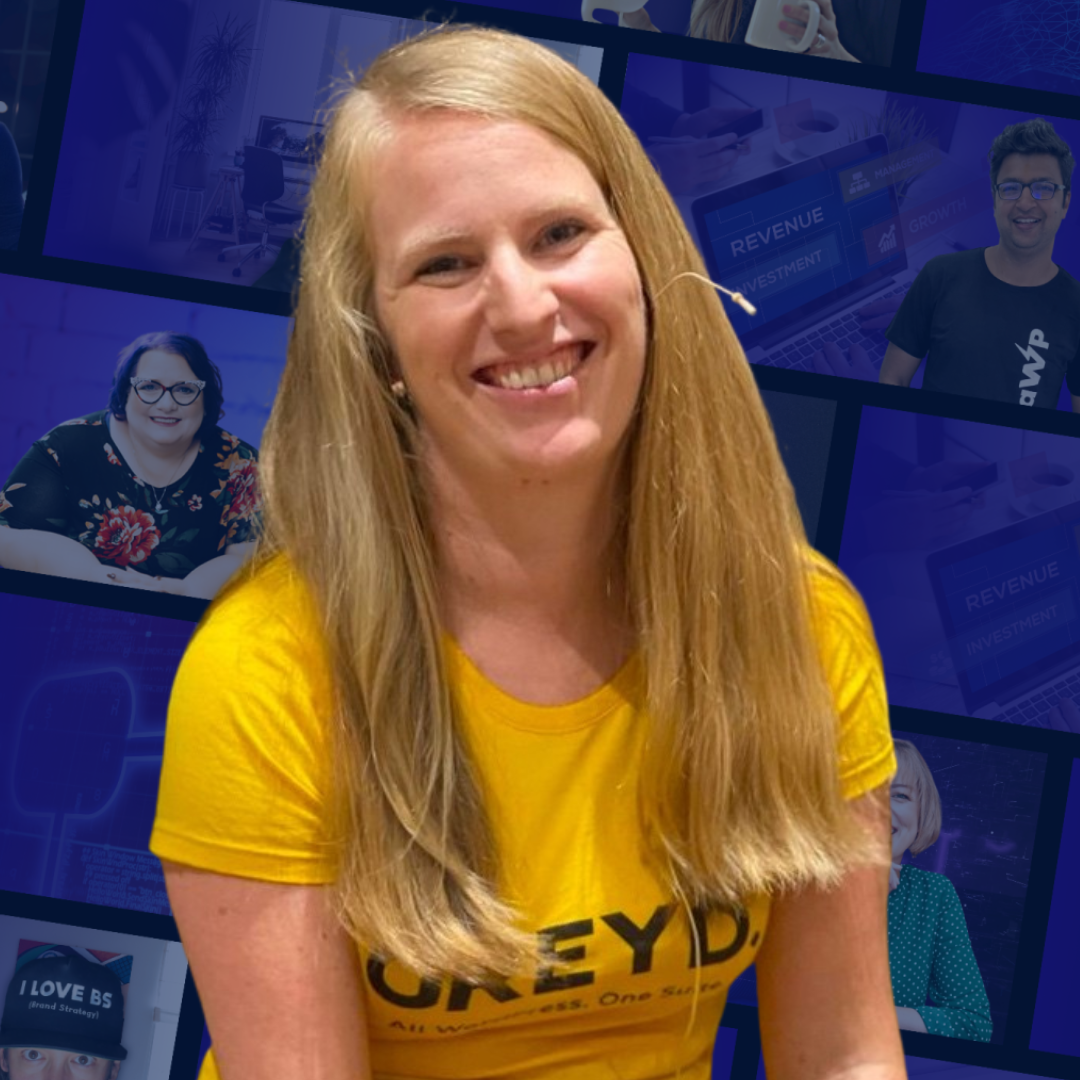 About the speaker
Sandra Kurze
CEO and CMO of Crate
About the speaker
Sandra Kurze
CEO and CMO of Crate
Sandra Kurze is CEO and CMO of Crate, a company built out of her own agency's attempt to turn internal tooling into a standalone WordPress product.